
The New Role of Accountants
How is the new role of accountants evolving in an ever-changing environment?
Who Are We?
Center for Indonesian Accounting Studies (CIAS) is an institution focused on the development of accounting practices and the accounting profession in Indonesia. CIAS is committed to improving the quality of accounting education and training, as well as supporting research relevant to industry developments. Through various programs and activities, CIAS strives to promote high accounting standards and support accounting professionalism in Indonesia. This institution is authorized by the Ministry of Law and Human Rights of Indonesia with the decision letter number: AHU-0002099.AH.01.07. TAHUN 2023
What We Do?
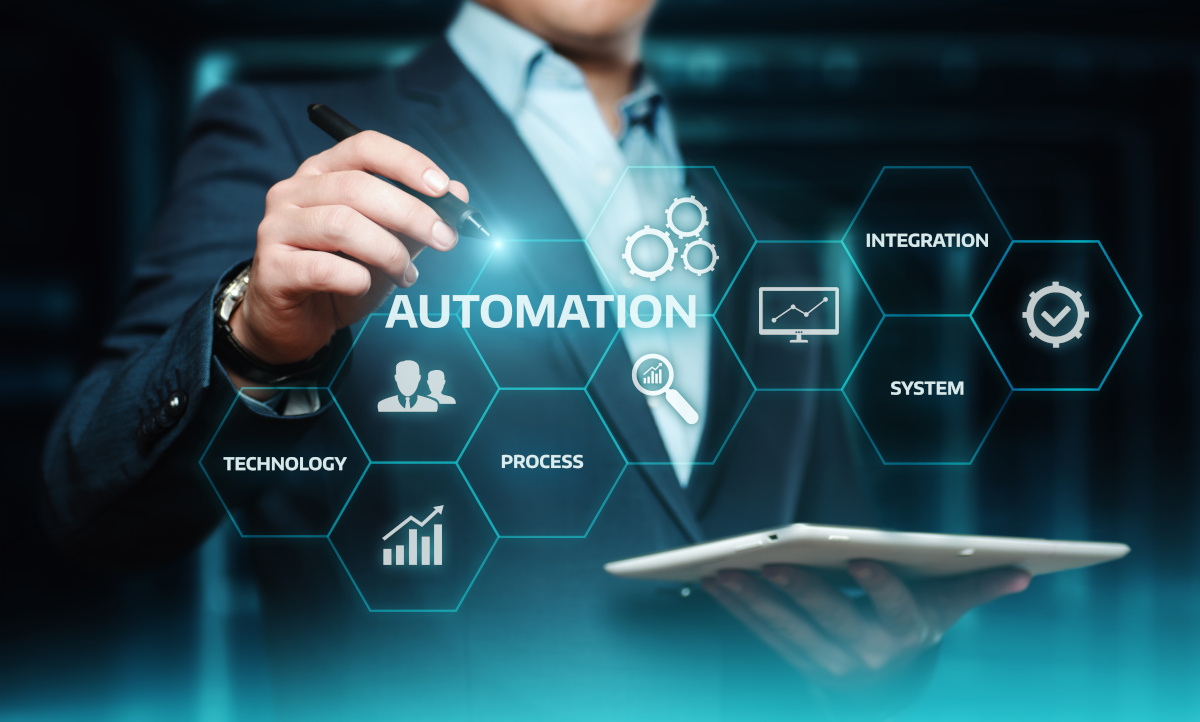
The role of accountants is rapidly evolving in response to technological advancements, changing business landscapes, and increasing regulatory complexities. Traditional accounting tasks, such as bookkeeping and financial reporting, are becoming increasingly automated, allowing accountants to shift their focus towards more strategic and value-added activities. This transformation requires accountants to develop new skills and competencies, including data analytics, business intelligence, and strategic decision-making.
We invite everyone to prepare themselves to face the challenges of a changing environment—be it economic, social, or technological.
This is the new role of accountants in the future
The role of accountants has undergone significant transformation in line with technological advancements, increasingly complex business dynamics, and ever-evolving regulations. The automation of conventional accounting tasks, such as bookkeeping and financial reporting, has created opportunities for accountants to move towards more strategic and value-adding roles. This shift demands that accountants master new skills such as data analysis, business intelligence, and strategic decision-making. The ability to interpret complex data, provide in-depth business insights, and contribute to strategic company planning has now become an integral aspect of the modern accounting profession.
In facing this new era, accountants are challenged to continue adapting and developing themselves. They are required not only to understand traditional accounting principles but also to be proficient in using the latest technology, have a strong grasp of industry trends, and be able to provide impactful recommendations for business decision-making. The role of accountants in the future will become increasingly integrated with the strategic aspects of organizations, positioning them as critical business partners in responding to ever-changing economic, social, and technological challenges. Therefore, continuous competency development and readiness to adapt are key for accountants to remain relevant and significantly contribute in the dynamic business landscape.
Idea
The way accounting practices are conceptualized is being revolutionized by digital technology, requiring accountants to adapt to new tools, software, and procedures to fulfill their responsibilities effectively in today’s business environment. Digital technology has significantly changed the way accounting practices are carried out. Accountants now face a variety of advanced tools and software that enable the automation of routine tasks, deeper data analysis, and more accurate, real-time financial reporting. Cloud-based accounting systems, artificial intelligence (AI), and big data analytics have become integral components of modern accounting processes, enabling accountants to focus on data interpretation and strategic decision-making. These changes require accountants to continuously improve their technological skills and adapt quickly to new innovations. Beyond traditional accounting knowledge, professionals in this field are now required to understand cybersecurity, data management, and even basic programming. The role of accountants has shifted from mere record-keepers to business advisors capable of providing valuable insights based on complex data analysis. Thus, ongoing education and training are increasingly important to ensure that accountants remain relevant and competitive in an ever-evolving business landscape.
Create
The idea is about how to prepare accountants for environmental changes, such as economic, social, or technological shifts. The importance of the accountant’s role in preparing to face these changes. Preparing accountants to face environmental changes is a crucial aspect of the modern accounting profession. Accountants need to develop adaptive capabilities for rapid and dynamic economic, social, and technological changes. This includes a deep understanding of global economic trends, regulatory changes, and technological developments such as artificial intelligence and blockchain that can impact accounting practices. In addition, accountants must also enhance their skills in data analysis, complex problem-solving, and effective communication to provide valuable insights for organizations.
The role of accountants in facing environmental changes is highly significant, as they are responsible for presenting accurate and relevant financial information for decision-making purposes. Accountants who are equipped to face change can help organizations identify new risks and opportunities, improve operational efficiency, and ensure compliance with evolving standards and regulations. By proactively preparing themselves, accountants can become valuable strategic partners for organizations in confronting challenges and seizing opportunities in this fast-changing era.
Iteration
The Importance of Digital Technology Literacy
Technology for accountants. Digital technology is revolutionizing accounting practices, requiring accountants to adapt to new tools, software, and methods to effectively fulfill their roles in today’s business landscape.
The importance of digital technology literacy for accountants cannot be overstated in this modern era. Digital technology has significantly revolutionized accounting practices, changing how accountants do their work and interact with financial data. New tools such as advanced accounting software, data analytics, and integrated financial management systems have become an integral part of the profession. Accountants skilled in digital technology can leverage these tools to increase efficiency, accuracy, and speed in transaction processing, financial reporting, and decision-making.
Furthermore, digital technology literacy enables accountants to adapt to rapid changes in the business landscape. The ability to use and understand the latest technology helps accountants automate routine tasks, analyze complex data, and provide deeper insights to their clients or organizations. It also enables accountants to play a more strategic role within organizations, contribute to broader business decision-making processes, and add value through predictive analysis and real-time reporting. Therefore, accountants who embrace and master digital technology will not only remain relevant in their profession but also become valuable assets in facing challenges and opportunities in the digital era.
Want to support us?
If you are interested in contributing an unconditional donation, please contact us at info@akuntan.or.id or make a direct donation to our account: Bank BRI Account: 315501000016564 under the name Center for Indonesian Accounting Studies. Your support is greatly appreciated.
Show off some features with this flexible layout!
Show off some features with this flexible layout!
Show off some features with this flexible layout!
Show off some features with this flexible layout!
Show off some features with this flexible layout!
Show off some features with this flexible layout!
Leverage agile frameworks to provide a robust synopsis
Lorem ipsum dolor sit amet, consectetur adipiscing elit. Maecenas varius tortor nibh, sit amet tempor nibh finibus et. Aenean eu enim justo.
Leverage agile frameworks to provide a robust synopsis
Lorem ipsum dolor sit amet, consectetur adipiscing elit. Maecenas varius tortor nibh, sit amet tempor nibh finibus et. Aenean eu enim justo.